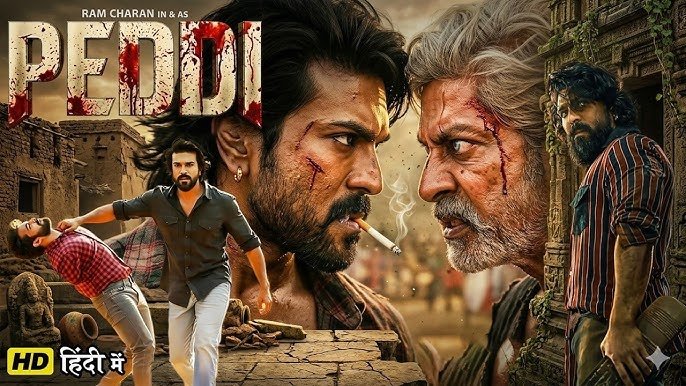
PEDDI Tamil Movie Review
Cast-:
Ram Charan , Janhvi Kapoor , Shivarajkumar , Divyendu Sharma , Jagapathi Babu , Dayanand Reddy , Resad Ajim ,Avinashvarma , Chammak Chandra , Shruti Haasan , Boman Irani , Upendra Limaye , Mime Madhu ,Nirmal Nitish, Satya , Krithi Shetty , Kishore Raju Vasistha , John Vijay and others.
Crew-:
Writer, Director: Buchi Babu Sana Presents: Mythri Movie Makers, Sukumar Writings Banner: Vriddhi Cinemas Producer: Venkata Satish Kilaru Co-producer: Ishan Saksena Music Director: AR Rahman DOP: Rathnavelu ISC Editor: Navin Nooli Production Design: Avinash Kolla Choreographer: Bosco Martis Executive Producer: V. Y. Praveen Kumar Sound Design: Raghunath Kemisetty Marketing: First Show Music Label: T-Series DI: Annapurna Studios Colorist: Andreas Brueckl Sound & Mix: Mixed in Dolby Atmos at AM Studios, Chennai Mixed by – S. Sivakumar Pre-mixed & Mastered by – Aravind MS Studio CEO – Riyasdeen Riyan Tamil Credits: Dubbed by: Vjjay Language Company Dialogues: K.N. Vijayakumar Dialect Coach: Adam Dasan Dubbing Direction: K.N. Vijayakumar & Adam Dasan Dubbing Studio: AVM ‘C’ Dubbing Engineer: Shaju C,P R O : Yuvaraaj and Others.
Story-:
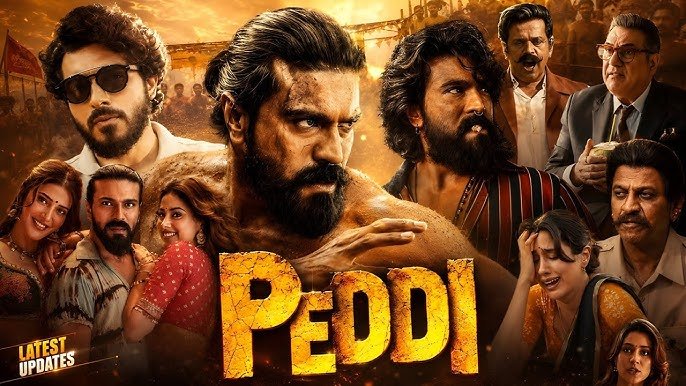
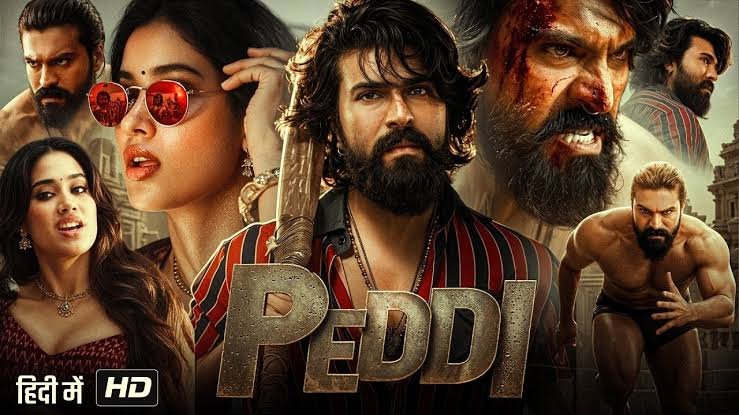
Peddi (Ram Charan), a resident of a hill village, works alongside his fellow villagers at a sugar factory. Simultaneously, he plays for—and secures victories for—the cricket team owned by Rampujji (Divyendu), an influential figure in Vijayanagaram.
At the factory where they are employed, John Vijay pays only half-wages to Ram Charan’s villagers. The justification he offers for this disparity is that they lack any identity of their own.
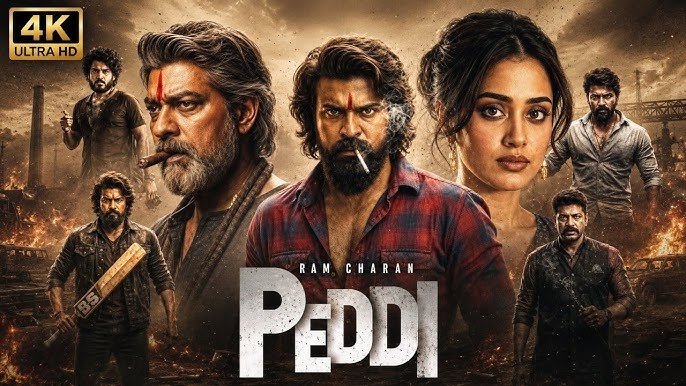
Subsequently, after standing up for Achiyamma (Janhvi Kapoor), Peddi is publicly humiliated on the cricket field as a consequence.
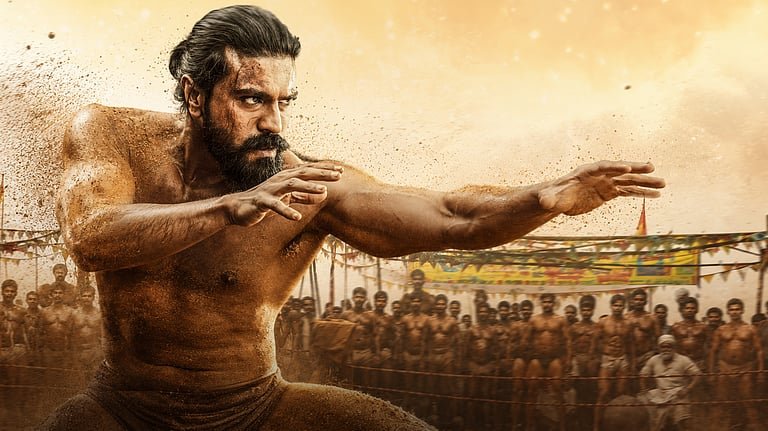
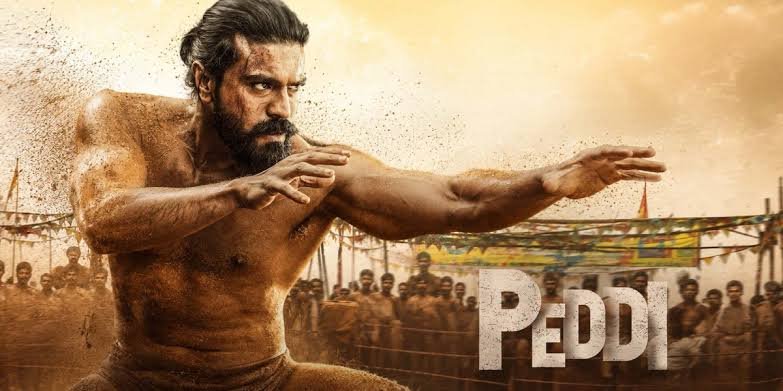
When he is once again taunted for lacking an identity, Peddi seeks out wrestling coach Gaur Naidu to undergo training. The remainder of the story chronicles how, through this training, he ultimately secures an identity for his village.
Watch The Video-:
Movie Review-:
Regardless of whether a film is based on sports, is commercially driven, or serves as pure entertainment, the audience must be able to connect with it. Neither the magnitude of the financial investment nor the number of actors involved matters; the primary objective must always be to entertain the audience and keep them engaged.
While Allu Arjun’s character in the film *Pushpa* struggles for recognition and identity, Ram Charan’s character, ‘Bucchi,’ strives to carve a name for himself and bring recognition to his village. Through the protagonist’s journey, director Buchi Babu Sana has crafted a narrative centered around three distinct sporting disciplines: cricket, wrestling, and sports for the differently-abled. When addressing such themes, the storytelling must be both authentic and emotionally resonant. Furthermore, when a film is produced with a budget running into hundreds of crores, the director must exercise even greater caution. Films like *Chak De! India* succeeded because, despite being set against the backdrop of hockey, they were deeply rooted in powerful emotions that resonated profoundly with the audience. *Lagaan* utilized cricket as its backdrop to forge a magnificent connection with viewers, while *Dangal* transformed a wrestling narrative into one of Indian cinema’s greatest triumphs. Similarly, *Bhaag Milkha Bhaag* captivated audiences by offering a deeply emotional portrayal of the life of athlete Milkha Singh. The success of these films can be attributed to their authenticity, realism, and emotional depth.
However, in the film *Bucchi*, despite having woven together elements from all these sports, Buchi Babu ultimately misses out on the most critical aspect: emotional resonance. The story did not require three different sports; a single one would have sufficed to structure it effectively. Instead, without adequate emotional depth or narrative justification, the protagonist shifts quite abruptly from one sport to another.
Despite featuring a massive ensemble cast comprising approximately 60 to 70 actors, the film revolves almost entirely around Ram Charan. Consequently, within its runtime of three hours and nine minutes, hardly anyone else gets a significant opportunity to leave their mark. Producer Venkata Satish Kilaru makes his debut with this film, *Bheemaa*, under the banner of Vriddhi Cinemas. Meanwhile, Mythri Movie Makers and Sukumar Writings have also collaborated on this project. The story is set in the late 1990s in and around the region of Vizianagaram. Bheemaa (Ram Charan) resides in a remote village nestled near the hills. Since the village lacks official government recognition, its inhabitants are left without formal identities. Appalasuri (Jagapathi Babu), a fellow resident of the same village, fights tirelessly to secure this official recognition. Furthermore, he repeatedly approaches government officials in an effort to secure a railway halt for the train that passes through their village.
Bheemaa plays cricket, turning out for either the Bobbili or Vizianagaram teams depending on which offers him the higher pay. Aside from cricket, he also works as a daily-wage laborer at a jaggery manufacturing unit. His cricketing prowess has made him a popular figure throughout the region.
One day, he spots Achayyamma (Janhvi Kapoor)—the daughter of the local Member of the Legislative Assembly (MLA)—and falls in love with her at first sight. A conflict involving Achayyamma subsequently causes a rift between him and the individuals who provide him with opportunities in the world of cricket. In a subsequent match, both teams engage in match-fixing. Consequently, Bhetti finds himself helpless and distraught, unable to secure a victory for his team. Heartbroken by this experience, he decides to quit cricket and take up wrestling instead. Gowri Naidu (Shivarajkumar)—a respected wrestling coach renowned for having trained numerous champions—initially rejects Bhetti’s request to join his academy. However, after some persuasion, he agrees to accept him as a student. Bhetti gradually evolves into a skilled wrestler and earns the opportunity to compete at the national level in Delhi. What unfolds in Delhi? Does Bhetti succeed in the world of wrestling? More importantly, does he succeed in securing recognition for himself and his village? The answers to these questions unfold on the silver screen. This story is set in the late 1990s in and around the region of Vizianagaram. Bhetti (Ram Charan) resides in a remote village nestled amidst the hills. As the village lacks official government recognition, its inhabitants are left without formal identities. Appalasuri (Jagapathi Babu), a fellow resident of the same village, fights tirelessly to secure this recognition.
Gowri Naidu (Shivarajkumar)—a respected wrestling coach renowned for having trained numerous champions—initially rejects Bhetti’s request to join his academy. However, after some persuasion, he agrees to accept him as a student. Bhetti gradually evolves into a skilled wrestler and earns the opportunity to compete at the national level in Delhi. What transpires in Delhi? Does Bhetti triumph in the wrestling arena? More importantly, does he succeed in securing recognition for himself and his village? The answers to these questions unfold on the silver screen. The story is set in the late 1990s in and around the region of Vizianagaram. Bhetti (Ram Charan) resides in a remote village nestled amidst the hills. Since the village lacks official government recognition, its inhabitants are left without formal identities. Appalasuri (Jagapathi Babu), a fellow resident of the same village, fights tirelessly to secure this recognition. Furthermore, he repeatedly approaches government officials in an effort to secure a railway halt for the train that passes through their village.
Bhetti plays cricket, switching between the Bobbili and Vizianagaram teams depending on which offers him the higher pay. In addition to cricket, he works as a daily-wage laborer at a jaggery manufacturing unit. His cricketing prowess has made him a popular figure in the region.
One day, he spots Achayyamma (Janhvi Kapoor)—the daughter of the local Member of the Legislative Assembly (MLA)—and falls in love with her at first sight. A conflict involving Achayyamma creates a rift between Bhetti and the individuals who provide him with opportunities in cricket. In a subsequent match, both teams engage in match-fixing. Consequently, Petta finds himself at a loss, struggling helplessly as he is unable to lead his team to victory. Heartbroken by this experience, he decides to quit cricket and pursue wrestling instead. Gauri Naidu (Shivarajkumar)—a respected wrestling coach renowned for having trained numerous champions—initially rejects Petta’s request to join his academy. However, after some persuasion, he eventually accepts him as a student. Petta gradually evolves into a skilled wrestler and earns the opportunity to compete at the national level in Delhi. What unfolds in Delhi? Does Petta succeed in wrestling? More importantly, does he succeed in securing recognition for himself and his village? The answers to these questions unfold on the silver screen.
The story is set in the late 1990s in and around the region of Vizianagaram. Pedda (Ram Charan) resides in a remote village nestled near the hills. Since the village lacks official government recognition, its inhabitants are left without proper identification. Appalasuri (Jagapathi Babu), a fellow villager, fights tirelessly to secure this recognition. Furthermore, he repeatedly approaches government officials in an effort to secure a railway halt for the train that passes through their Vizianagaramam Pedda plays cricket, switching between the Bobbili and Vizianagaram teams depending on which offers him the higher pay. Aside from cricket, he also works as a daily-wage laborer at a jaggery manufacturing unit. His cricketing prowess has made him a popular figure in the region.
One day, he spots Achayyamma (Janhvi Kapoor)—the daughter of the local Member of the Legislative Assembly (MLA)—and falls in love with her at first sight. A conflict involving Achayyamma creates a rift between him and those responsible for providing him opportunities in cricket. In a subsequent match, both teams engage in match-fixing. Consequently, Bhetti finds himself helpless and unable to secure a victory for his team. Heartbroken by this experience, he decides to quit cricket and pursue wrestling instead. Gauri Naidu (Shivarajkumar)—a respected wrestling coach known for having trained numerous champions—initially rejects Bhetti’s request to join his academy. However, after some persuasion, he accepts him as a student. Bhetti gradually evolves into a skilled wrestler and earns the opportunity to compete at the national level in Delhi. What unfolds in Delhi? Does Bhetti achieve success in wrestling? More importantly, does he succeed in bringing recognition to himself and his village? The answers to these questions unfold on the silver screen.
Buchi Babu Sana, who made a promising debut five years ago with the film *Uppena*, presents his second directorial venture with *Bhetti*. Ram Charan deserves commendation for choosing to back a sports drama that prioritizes storytelling, rather than opting for a typical commercial entertainer.
His faith in the story and his supportive attitude toward the director are commendable. However, the director ultimately weakens the film by failing to sustain its emotional core and by unnecessarily complicating the narrative with the inclusion of three different sports.
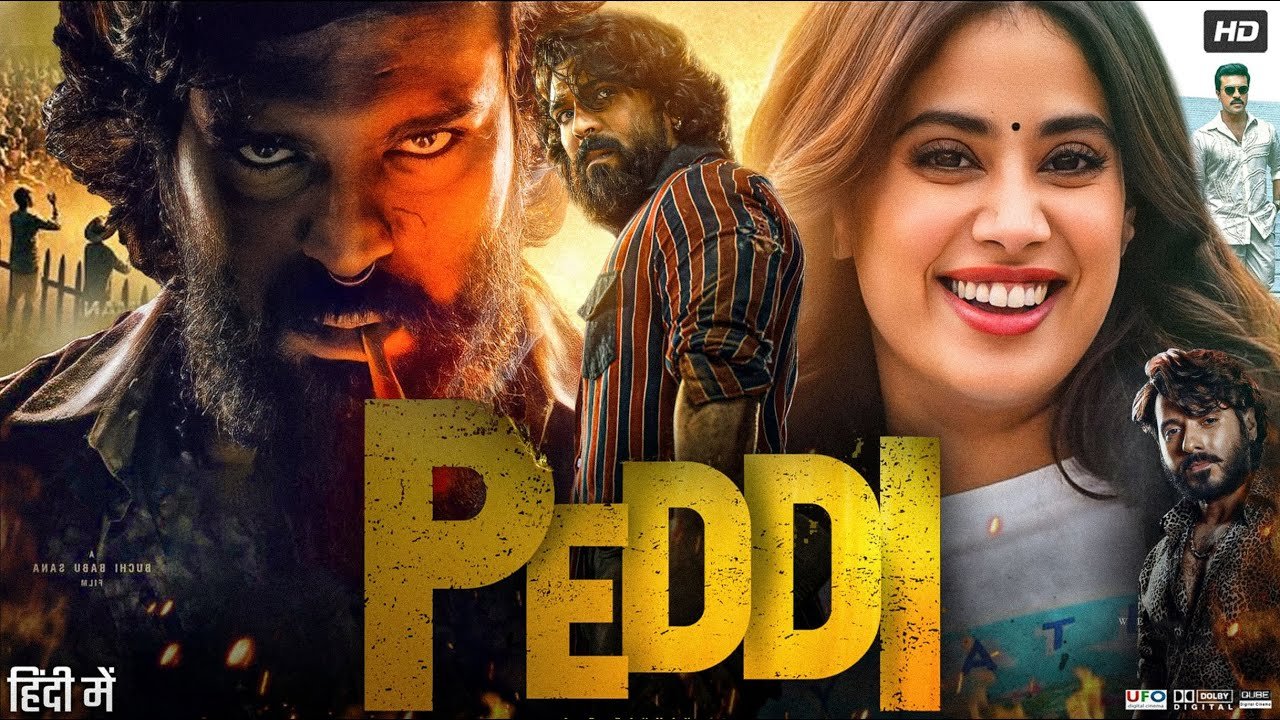
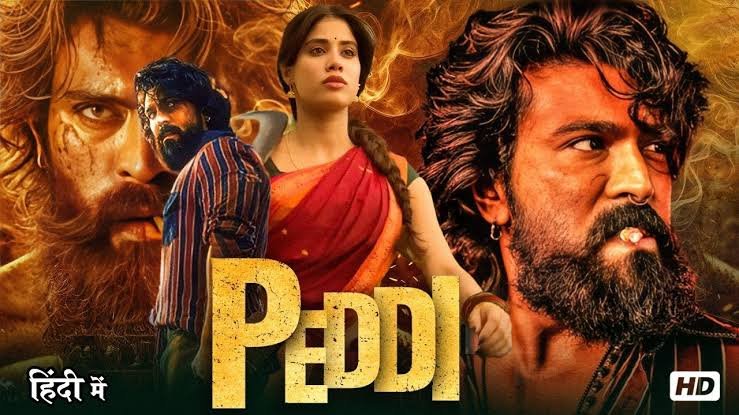
One of the most significant flaws becomes apparent right at the beginning. Boman Irani’s character—a sports advisor—arrives in Vijayanagaram and inquires about ‘Box’. A villager then proceeds to narrate Box’s story to him. The issue here is that Box is portrayed as an internationally acclaimed, renowned Paralympic gold medalist. It defies logic that a senior sports advisor, affiliated with the Ministry of Sports, would possess such limited knowledge about him. Had this story been recounted to a complete stranger, it would have been understandable; however, in this specific context, the logic simply does not hold up.
Another major shortcoming is the film’s singular focus on Ram Charan. From start to finish, the narrative revolves entirely around his character—his struggles, triumphs, emotions, and dance sequences. Despite the presence of dozens of actors, no one else is given the opportunity to deliver a memorable performance or utter a dialogue that leaves a lasting impact.
In a film running for over three hours, the supporting characters ought to have played a more substantial role. Instead, most of them—particularly in the second half—make brief appearances before fading into the background. Janhvi Kapoor’s character proves to be yet another disappointment. Aside from a couple of scenes and songs, she shares very little narrative connection with the story; moreover, she practically vanishes in the second half.
The film also falters in terms of authenticity. Since the story is set in the Vijayanagaram region of Uttarandhra, the local dialect and customs should have been accorded greater significance. While some actors handle the specific diction well, many others struggle to do so. In an effort to appeal to audiences on an All-India level, the director has cast actors from diverse linguistic backgrounds. Consequently, the film suffers from significant issues in dubbing and jarring lip-sync mismatches. These flaws often make the movie feel like nothing more than a dubbed version.
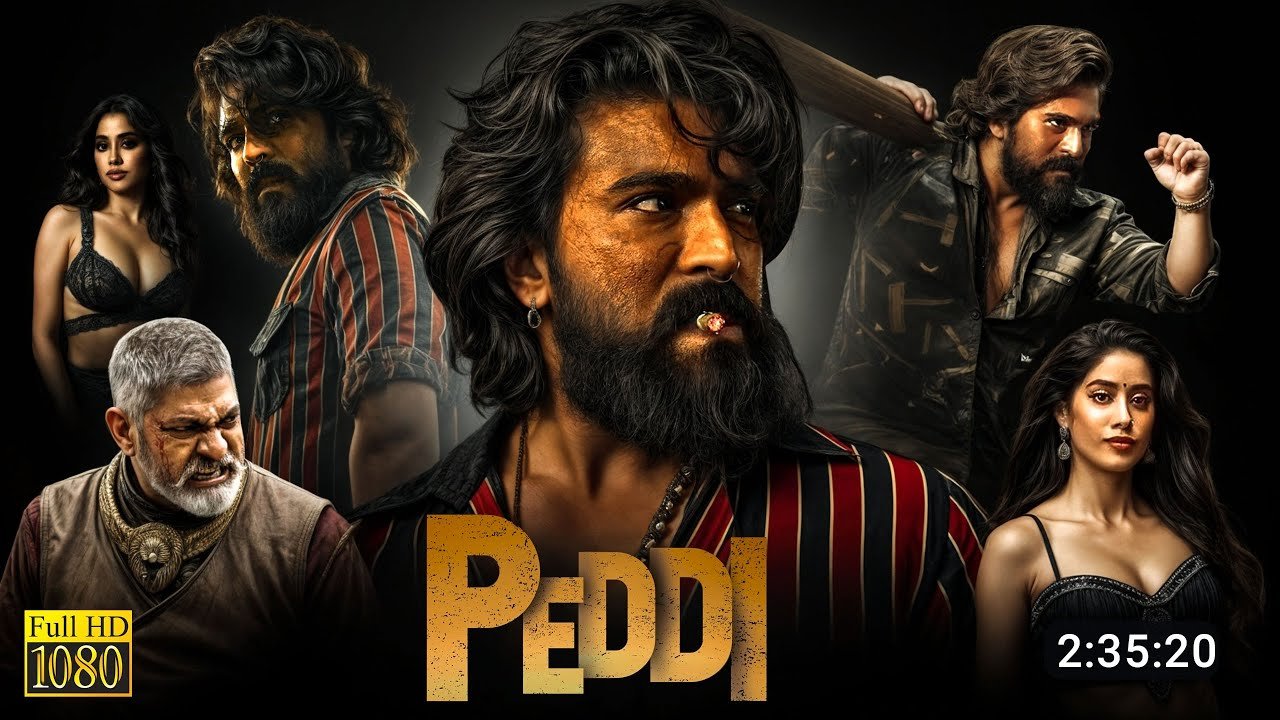
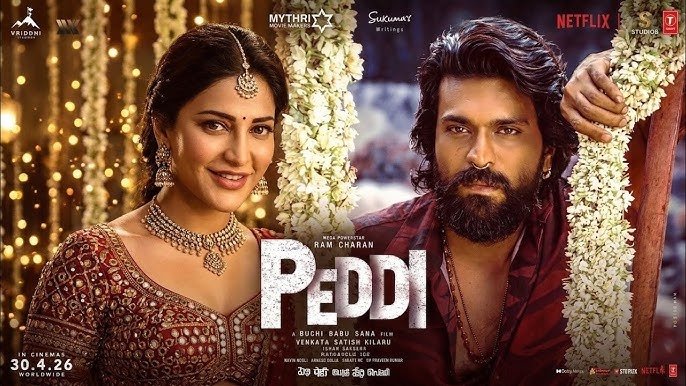
Even talented actors like Rao Ramesh, who appear in only a handful of scenes, remain largely underutilized. The special song adds little value, while the sequence depicting the protagonist’s transition from one sport to another lacks both sufficient dramatic conflict and emotional justification.
Competing on an international stage—particularly in sports for the differently-abled—is by no means an easy journey. Yet, the film portrays this progression in a remarkably casual manner. Without adequately depicting the effort, struggle, or rigorous process involved, the protagonist is shown making a rapid leap from a national-level competition to an international marathon for the differently-abled.
The film’s greatest failing lies in its inability to forge an emotional connection with the audience. Although sports-related elements abound, the emotional highs and inspiring moments fail to reach their full potential. In several instances, the narrative feels repetitive and appears to be unnecessarily drawn out.
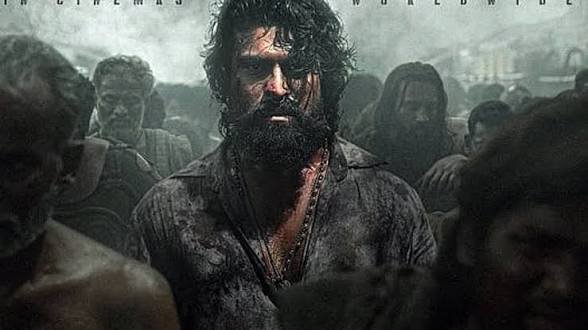
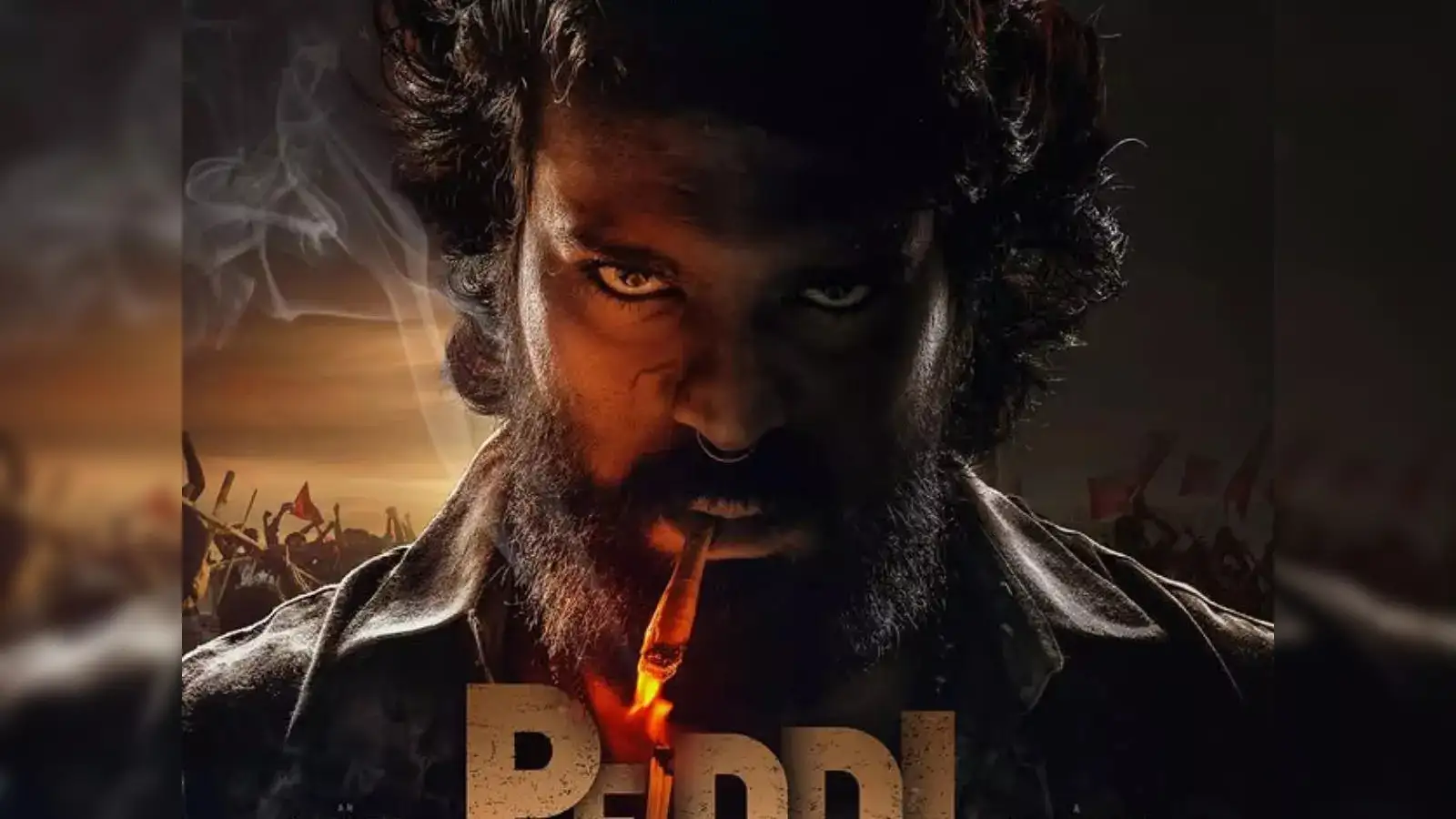
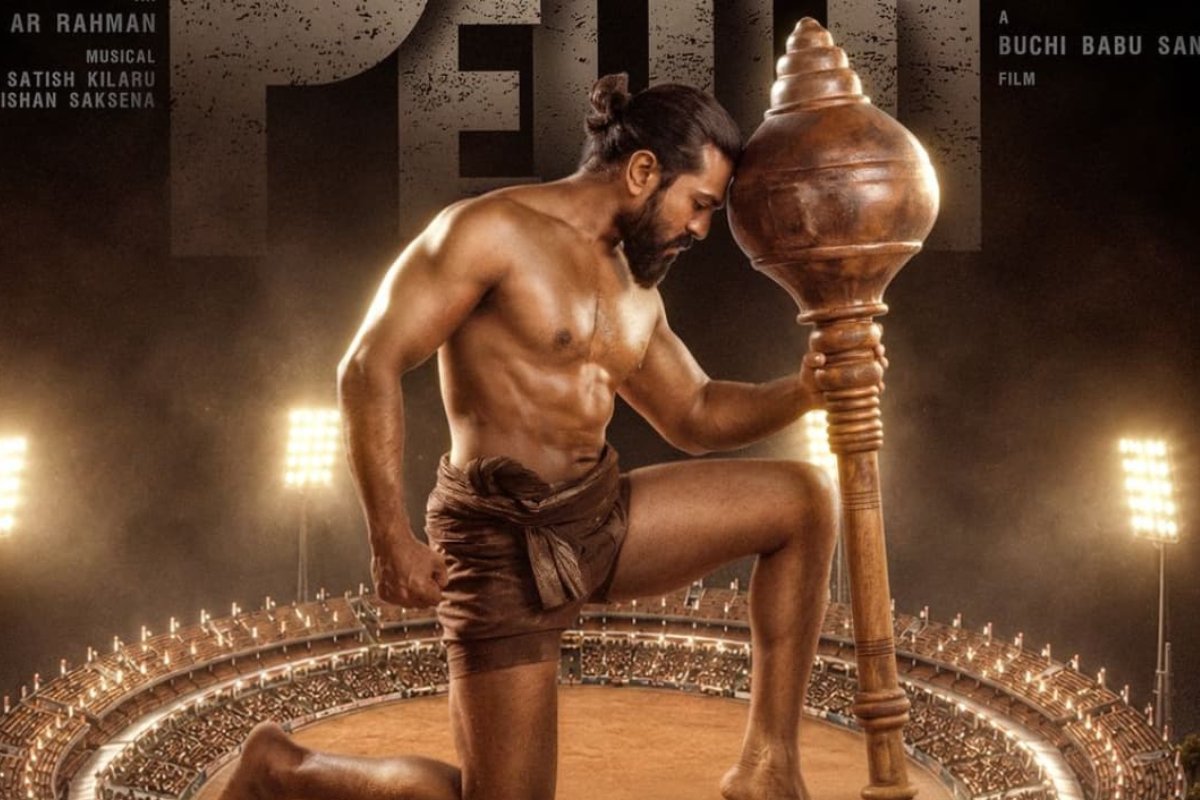
Nevertheless, the film’s core premise remains compelling. The protagonist, Betti, demonstrates an unwavering resolve to bring recognition to his village and ensure that trains begin making scheduled stops there—a commitment that conveys a meaningful social message. The line, “I don’t win continuously; I struggle continuously,” delivered by Betti, stands as one of the film’s most powerful dialogues. Had the director delved deeper into this central conflict and structured the narrative around it, the film would undoubtedly have made a far greater impact. In terms of acting, Ram Charan is undoubtedly the film’s greatest strength. His dedication and commitment are evident in every single scene. He delivers a sincere and mature performance, excelling in several emotionally challenging sequences. Unfortunately, a weak screenplay and inconsistent storytelling prevent his efforts from coalescing into a strong overall film. This is a story-driven project, and Ram Charan deserves commendation for setting aside his star status to take on such a role. His physical transformation is impressive and adds a layer of authenticity to the character.
Shivarajkumar has been given a substantial role, and he brings dignity and gravitas to the film. His performance as Gowri Naidu is one of the movie’s highlights. However, Jagapathi Babu occasionally appears to be overacting; a more restrained approach on his part would have been preferable. Janhvi Kapoor is utilized primarily for glamour and musical numbers, contributing little else to the film.
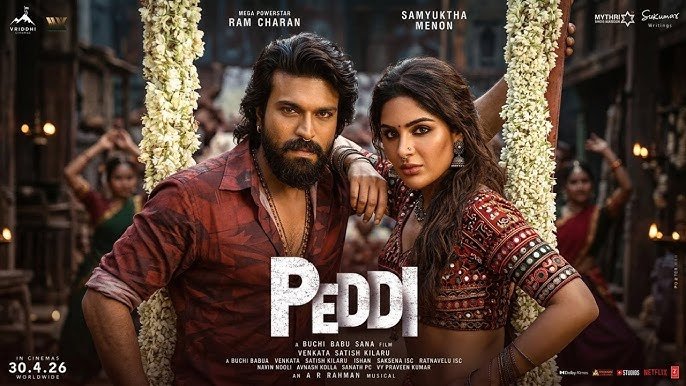
Although Boman Irani is a talented actor, he struggles with his command of the language, which renders certain segments of the film unconvincing. It also appears that Divyenndu’s presence has not been fully utilized. Rao Ramesh and several other talented actors have been wasted in poorly written roles.
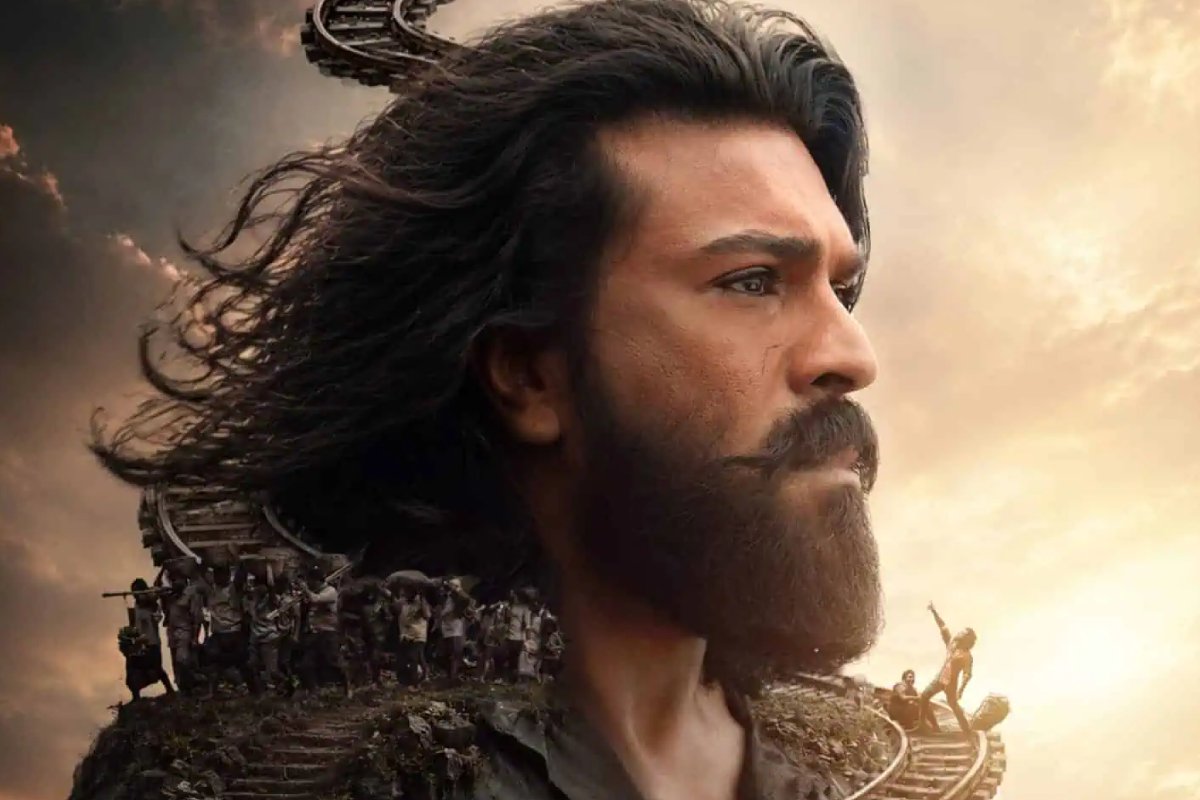
A.R. Rahman’s music fails to create an impact commensurate with his stature. While the songs gained popularity prior to the film’s release, they truly come alive on screen largely due to Ram Charan’s vibrant dance moves.
Art Director Avinash Kolla deserves special commendation for creating realistic sets that convincingly replicate actual locations. Cinematographer Rathnavelu has beautifully captured the landscapes and effectively handled the cricket and wrestling sequences. However, the film suffers from technical shortcomings in several areas—including inconsistent sound design, muffled dialogue, and issues with background vocals—which detract from the overall viewing experience.
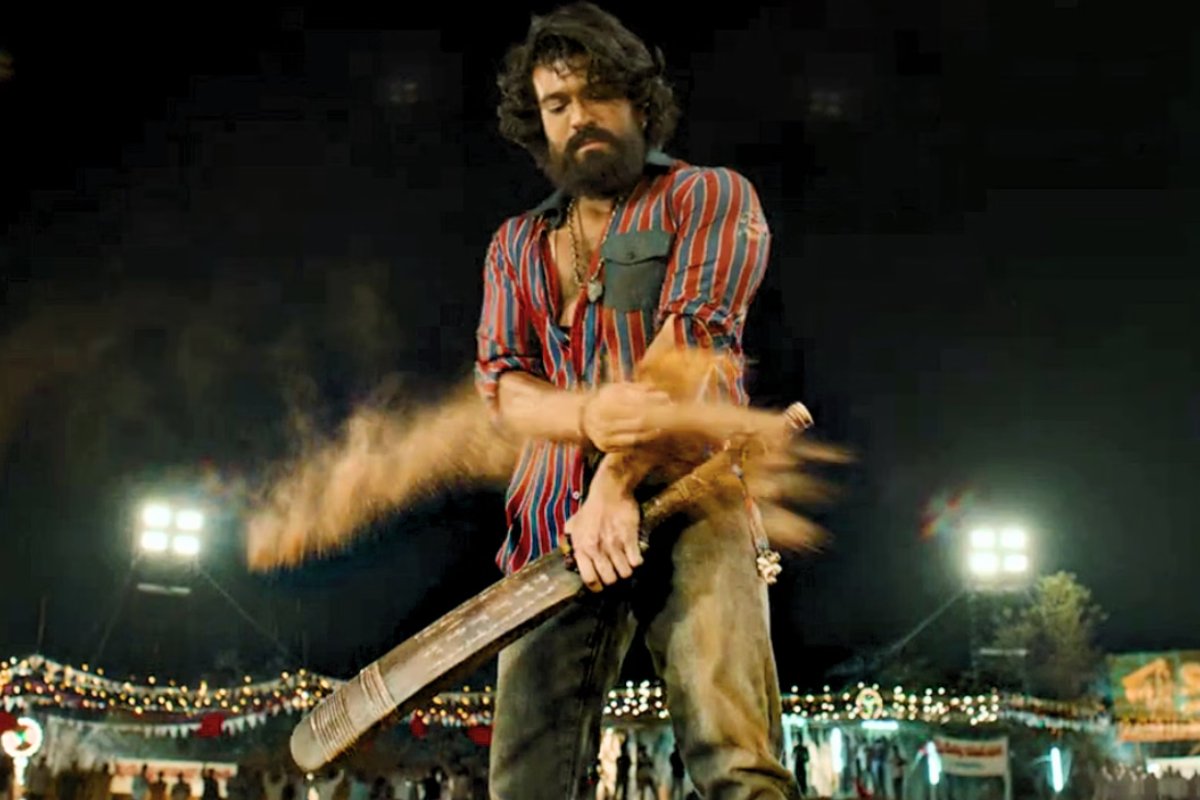
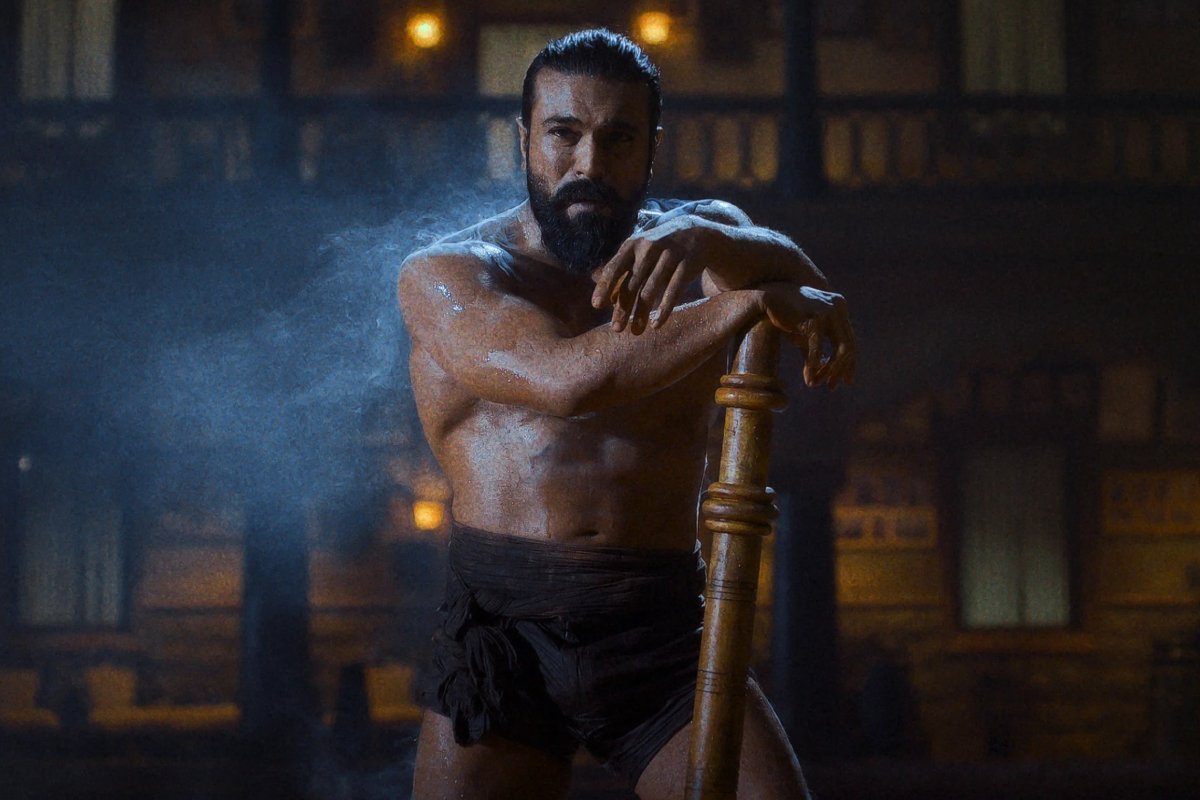
Ultimately, *Uppena* belongs entirely to Ram Charan; his performance carries the film from start to finish. It is not a typical commercial entertainer, but rather a narrative-driven drama that relies heavily on its emotional core. Unfortunately, Director Buchi Babu Sana fails to narrate the story effectively, missing numerous opportunities—both logical and emotional—along the way. Despite its flaws, Ram Charan’s performance remains the film’s greatest strength. Fans who admire his screen presence, physical transformation, and dance numbers may enjoy this film, but it struggles to leave a lasting impression on the general audience.
This Is My Personal Review So Please Go and Watch The Movie In Theaters Only.
Written by B4U Media Admin Rating B4U Media Admin 4 / 5