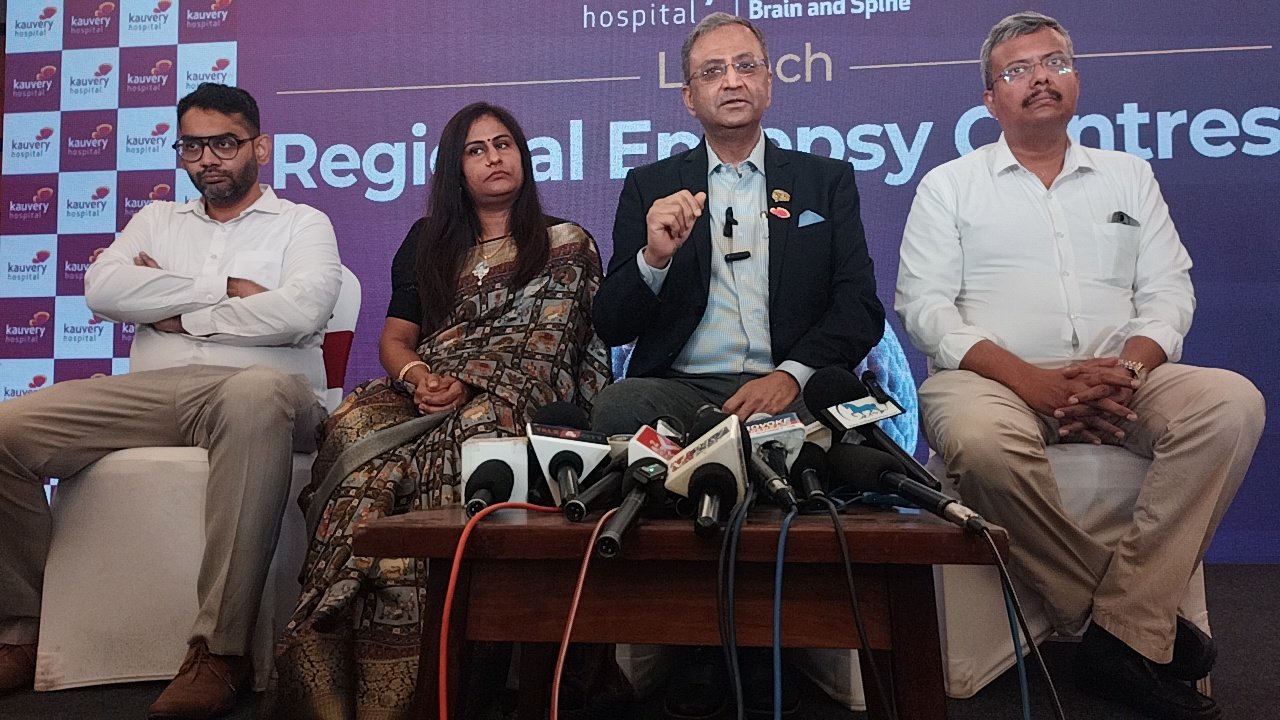
Kauvery Hospital Builds an Integrated Epilepsy-Care Network Across Its Chennai Hospitals
Regional Epilepsy Centre headed by neurologists have been opened at all three Kauvery hospitals in the city.
The centre will be supported by a multi disciplinary team comprising neurologists, neuroradiologists, electrophysiologists, clinical psychologists, rehabilitation specialists, and neurosurgeons.
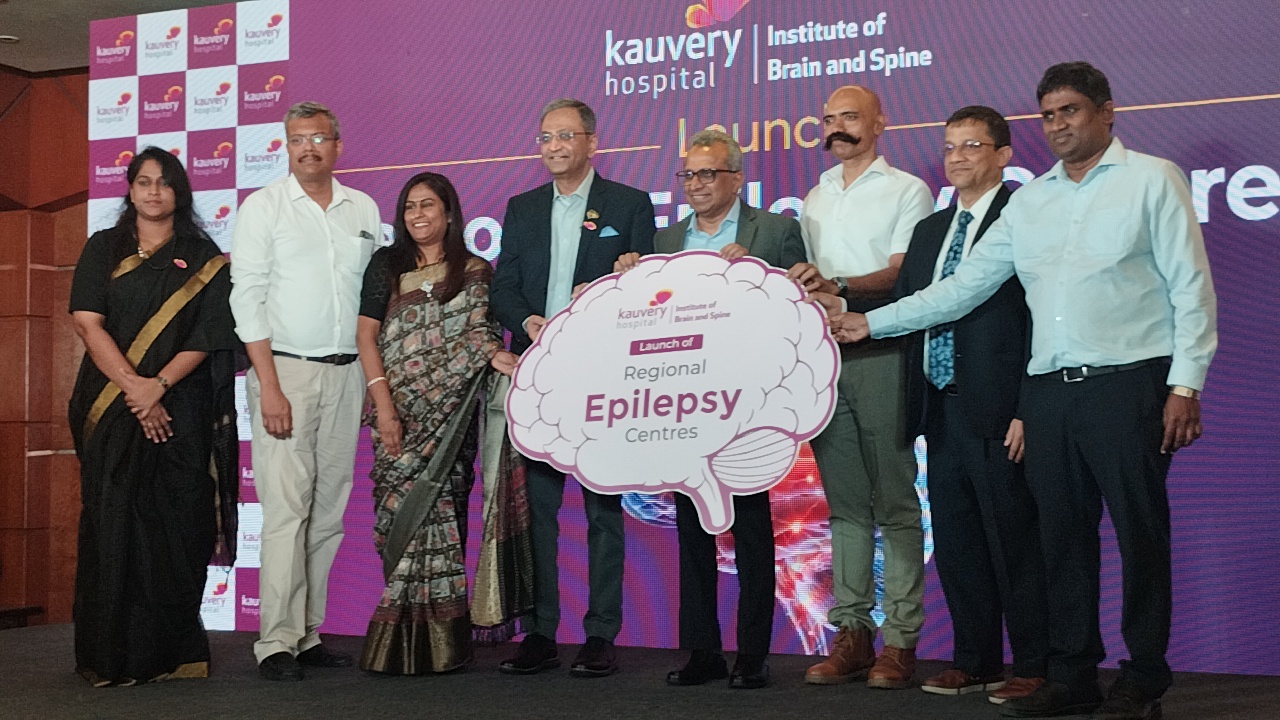
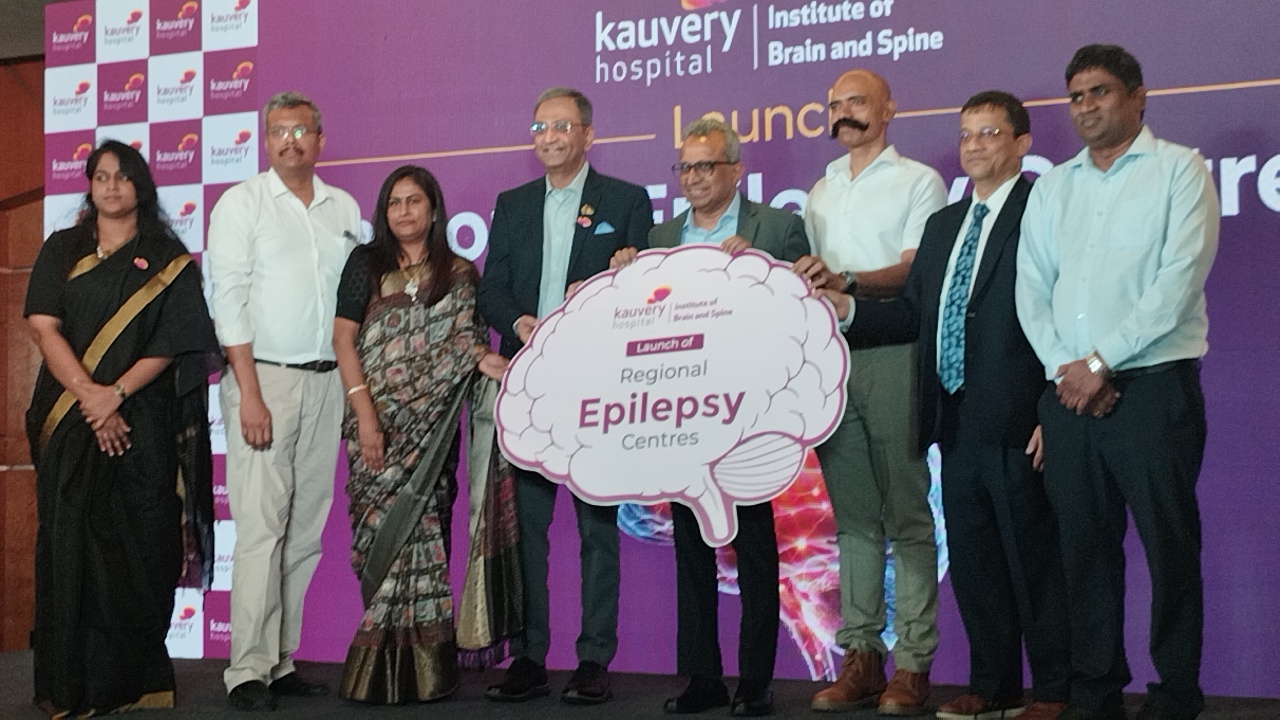
Chennai, August 2026: Kauvery Hospital has launched an integrated Regional Epilepsy Centre (K-REC), creating a coordinated epilepsy-care network across its three hospitals in Chennai, with standardised clinical protocols and uniform standards of care.
As part of the initiative, centres headed by neurologists have been opened at all three branches of the hospital. The centre will be supported by a multidisciplinary team comprising neurologists, neuroradiologists, electrophysiologists, clinical psychologists, rehabilitation specialists, and neurosurgeons.
The teams across the three centres will meet virtually once every fortnight to discuss patients in detail and assess the complexity of their conditions. A common epilepsy proforma has also been developed to facilitate standardized data collection and improve coordination among the teams.
Seizures that are not adequately controlled with medication will be referred to the epilepsy centre at Kauvery Hospital, Radial Road, for further evaluation. Their cases will be considered for advanced interventions, including epilepsy surgery. Once a surgical decision is made, the patient will undergo further evaluation and treatment at the centre. Following surgery, the patient will be transferred back to their respective epilepsy centre for continued follow-up and care.


The key objective of this integrated approach is to bring multiple neuroscience subspecialities under a single umbrella to enable accurate diagnosis and effective management of epilepsy – for incorrect classification of the type and characteristics of epilepsy can result in ineffective treatment. Similarly, the presence of a small structural lesion or other changes in the brain may make medications ineffective, potentially making the patient a candidate for surgery.
Epilepsy surgery is considered one of the most effective treatment options for appropriately selected patients, with a complete cure from seizure achieved in up to 75% of cases, along with a significant reduction in medication dosage.
kauvery hospital
In India, an estimated 12-15 million people, or approximately 1% of the population, live with epilepsy, commonly referred to as ‘fits’. Despite advances in medical treatment, around 20-30% of patients continue to experience seizures. While an estimated 1.3-1.5 million patients may be candidates for epilepsy surgery, fewer than 1,500 such surgeries are performed annually in India. Poor identification of suitable surgical candidates and limited awareness about epilepsy surgery are among the key reasons for this wide gap.
In his comments, Dr Krish Sridhar, Group Mentor, Neurosciences & Director, Institute of Brain and Spine stated: “Epilepsy is a complex neurological condition, and the success of treatment depends on accurate diagnosis and classification. When seizures remain uncontrolled despite appropriate medication, it is important to identify whether there is an underlying structural abnormality or another surgically treatable cause. Through K-REC, we are bringing together neurologists, neuroradiologists, electrophysiologists, neurosurgeons, psychologists and rehabilitation specialists to evaluate such patients collectively. This multidisciplinary approach will help us identify suitable candidates for epilepsy surgery at the right stage and offer them the possibility of better seizure control and improved quality of life.”
Dr Aravindan Selvaraj, Co-Founder and Executive Director of Kauvery Hospital said,
“The launch of K-REC marks an important step in strengthening comprehensive epilepsy care in the region. Our aim is to address the gap between the number of patients eligible for surgery and the number of patients who undergo surgery through a coordinated network of epilepsy centres, standardised protocols and regular multidisciplinary case discussions. By creating a seamless pathway from diagnosis and medical management to advanced evaluation, surgery and post-operative care, we hope to make specialised epilepsy care more accessible and ensure that patients receive the right treatment at the right time.”