ZEE5 Original Web Series SATTAMUM NEEDHIYUM 2 Tamil Webseries Review
Cast-:
Saravanan, Varalaxmi Sarathkumar, Lavanya, Premkumar, Kalloori Vinoth, Kavitha Bharathy, Aaru Bala, Peter J. Chandran, Shivin, Parul Sambariya, Pavan, Akshaya V, Priyanka Roboshankar, Abarna Sundarraman and Others.

Crew-:
Directed by: Balaji Selvaraj, Produced by: 18 Creators, Producer: Sasikala Prabhakaran, Story & Screenplay: Balaji Selvaraj, Pradeep Mariyan, Dialogues: Pradeep Mariyan, Director of Photography: S Gokulakrishnan, Music: Vibin Baskar, Editor: Aathieswaran R, Art Director: Bhavna Govardan, Audiography: Anand Ramachandran, Production Executive: Usilai M. Sivakumar, Executive Producers: R. Bharathidasan (Danny), Jagadeshwari Kanniyappan, Lyrics: Mohan Rajan, Co-Director: Mano, Dheeban, Stills: Siddhu, Chandan Ramesh, Final Mix Studio: Le Magic Lantern, SFX: Sujith Bathery, Colorist: John Sriram, DI Lab: Pro Colours, VFX: Vinnoli Ruban, Associate Directors: Gokul S, Hari Raj First Assistant, Directors: Abarajidhaa P, Bharathi Sriman A, Diwahar Manimaran, Assistant Directors: Sneha Mohan, Abhithaa Sree B K, Raman Naidu Additional, Cinematographers: R.K. Yogesh, N.S. Sathishkumar, Associate Cinematographers: S. Akilan Vigneshwar, R. Gangadharan, Assistant Cinematographers: Githan Sornam R, Harshith Kondapalli, Ram Charan Kasturi ,PRO : AIM Sathish and Others.

Story -:
Who gets to decide whether an accused person is truly guilty—society or the court of law? Should anyone, regardless of the nature of the accusation, be denied the right to legal representation? The web series ‘Sattamum Needhiyum 2’ (Law and Justice 2) centers on these crucial questions.
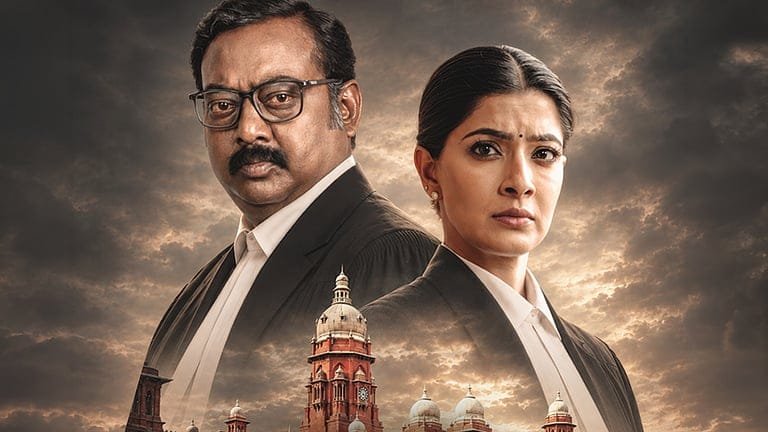
Produced by Sasikala Prabhakaran for 18 Creators, the series is co-written and directed by Balaji Selvaraj, in collaboration with Pradeep Marian. The cast features ‘Paruthiveeran’ Saravanan, Varalaxmi Sarathkumar, Lavanya, Kalloori Vinoth, Aaru Bala, Prem, and Kavitha Bharathi in key roles. Following the first season—which was released last year—this second season, featuring the same producer, lead actor, and director, is now streaming on the OTT platform ZEE5. Let’s see if this second installment manages to captivate the audience just as the first one did.
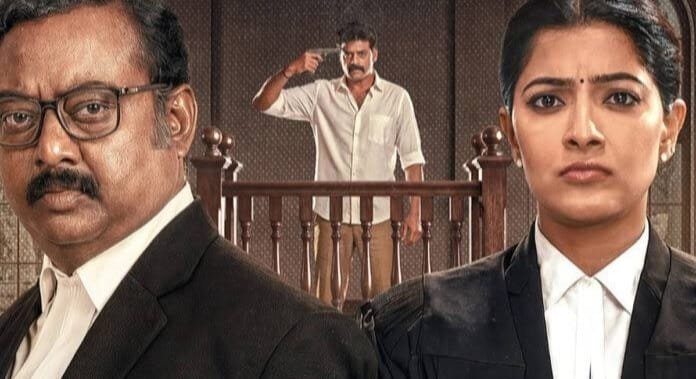
A high-ranking police officer (played by Prem)—who is also the husband of a prominent lawyer and the head of the Bar Council (Varalaxmi Sarathkumar)—is found dead, having been shot. In connection with this death, an inspector, several police officers, and a police vehicle driver from the Avadi police station are arrested. However, they maintain their innocence, asserting that they have no involvement in the murder.
Given that the victim was the husband of the Bar Council head, a decision is made that no lawyer should represent the arrested police officers in court. Under these dire circumstances, the wife of one of the arrested officers reaches out to Sundaramoorthy (Saravanan), an honest lawyer who works as a Notary Public.


Sundaramurthy, already facing financial hardship due to family obligations—including his daughter’s upcoming wedding—is confronted with a thought-provoking question: can those without money or power ever find justice in a court of law? Moved by the woman’s plea, he agrees to represent the accused police officers.
However, as the proceedings begin, a series of shocking revelations emerge. The abuses of power by the deceased high-ranking police officer, the turmoil in his personal life, and conflicts with his wife steer the case in an entirely different direction.
Meanwhile, it becomes clear that the police officers accused of the murder are not exactly paragons of virtue themselves. Amidst these complications, Sundaramurthy faces both threats and offers of money, aimed at coercing him to withdraw from the case.
Was it truly a murder, or was it a suicide? Are the charges against the police officers valid? What mystery lies behind this death? With the assistance of Lavanya, a young junior lawyer, does Sundaramurthy succeed in uncovering the truth? The rest of the series explores these questions.
Watch The Video-:
Movie Review -:
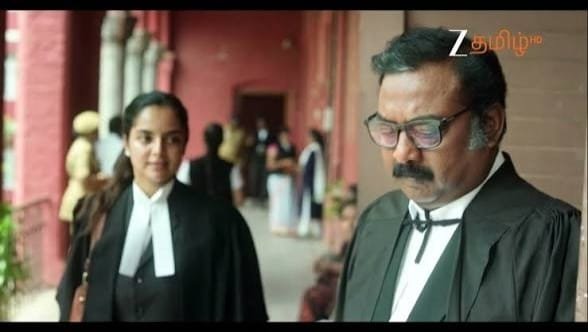
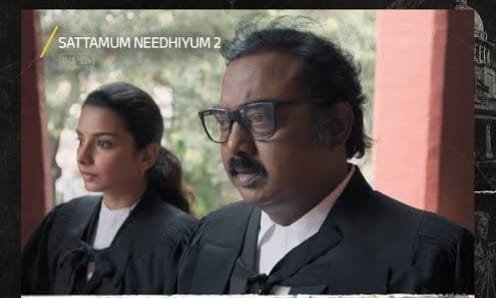
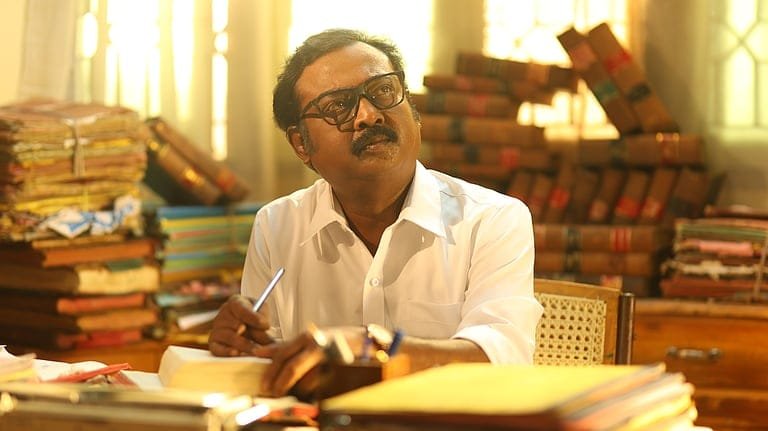
Following his performance in the first installment, ‘Paruthiveeran’ Saravanan once again delivers an excellent portrayal of the lawyer Sundaramurthy. He handles this multi-layered character—a man who refuses to compromise his integrity, a father struggling to balance family responsibilities, and an individual who fights for justice despite facing numerous obstacles—with remarkable naturalism.
In particular, his conduct in the courtroom, his composed handling of opposing arguments, and his gait, attire, and body language all bring an experienced lawyer to life on screen. It is commendable that he portrays the character with the perfect level of restraint, avoiding unnecessary theatrics or exaggerated dialogue delivery.
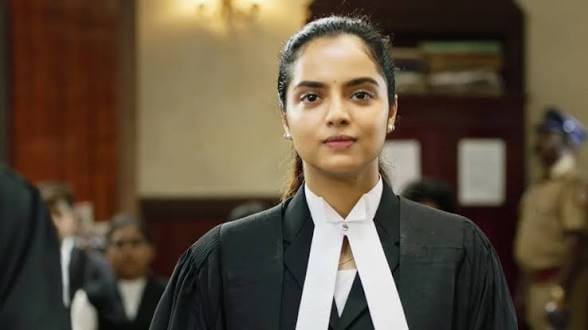
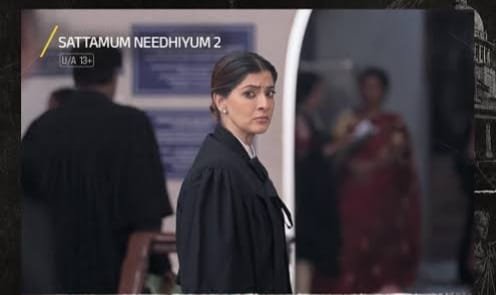
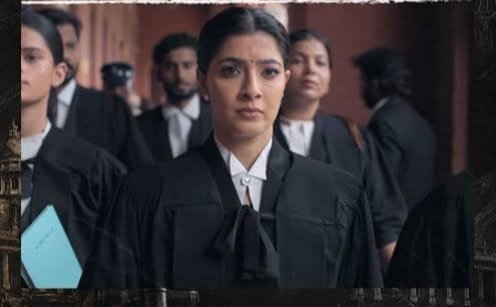
Varalaxmi Sarathkumar, appearing as the Bar Council President, brings the necessary gravitas to her role; she commands attention in a character defined by a blend of professional authority and personal complications. Lavanya, playing a young lawyer who assists Saravanan, also makes a strong contribution.
Other cast members—including College Vinoth, Aaru Bala, Prem, and Kavitha Bharathi—have clearly understood the essence of their respective roles. Notably, the performances of Pavan and College Vinoth stand out in several sequences.

The screenplay unfolds across two parallel tracks: one depicting events that transpired after a death, and the other following the proceedings of a court trial. The non-linear narrative—moving back and forth in time rather than following a straight chronological path—serves as a major strength of the series. By revealing new information at each stage, the plot keeps the audience’s suspicions shifting, which heightens the intrigue. Several unexpected twists add to the viewing pleasure.
Above all, the series deserves praise for its strong emphasis on the principle that every accused individual, regardless of who they are, is entitled to their legal rights. The core objective of the series is to advocate for justice for all, transcending the influence of wealth, status, or power. The effort by Pradeep Marian and Balaji Selvaraj to anchor the screenplay around this theme is highly commendable.
Gokula Krishnan’s cinematography aligns perfectly with the story’s atmosphere; he has crafted the visuals with precision, whether for the courtroom sequences or the flashbacks. Vipin Bhaskar’s background score effectively amplifies the tension, while the songs—penned by Mohanraj and thoughtfully integrated by the director—are a delight. Aatheeswaran’s contribution in editing is significant, as he has woven the non-linear narrative together without any confusion.
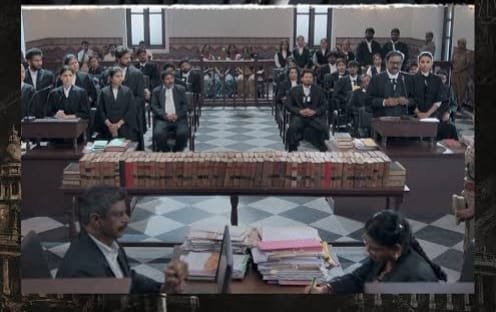
Similarly, the courtroom set, designed by art director Bhavana Govardhan, is striking. Another notable feature of the series is the duration of its episodes; each one concludes within about 20 minutes, ensuring a tight pace without any unnecessary drag. This runtime is well-suited for a series that relies primarily on its dialogue and screenplay. Furthermore, it is worth noting that the series avoids unnecessary vulgar dialogue and excessive profanity.


While the writing has strong elements, some scenes fail to deliver the intended impact. For instance, the incident where Sundaramurthy is removed from the Bar Council is presented as a major turning point; however, its gravity diminishes in the scenes that follow. Similarly, the sequence where an attempt is made to bribe Sundaramurthy to withdraw from the case does not significantly alter the course of the screenplay. These moments feel as though they were included solely to manufacture suspense at the end of certain episodes.
Budgetary constraints are also evident in several scenes. Sequences such as the Christmas procession, the resort party, and the wedding reception feature a limited number of extras, preventing them from achieving the intended sense of scale.
A significant shortcoming of the series is the lack of an emotional connection between the audience and the characters involved in the case. Not only the murdered officer but also the accused police officers are portrayed as individuals who have committed various wrongdoings. While one can intellectually accept the legal argument that they deserve justice, there are few moments that evoke a genuine emotional response from the audience regarding their plight.
Had one of the accused been portrayed as innocent—perhaps an ordinary person caught in the machinations of those in power—the story could have gained a stronger emotional foundation through their family. Such a character would have allowed Sundaramurthy’s fight for justice to resonate much more deeply with the audience.
The story feels as though it reaches a natural conclusion the moment the verdict is delivered in court. However, because the series continues for two more episodes beyond this point, the momentum built up until then begins to wane. While these scenes might have been engaging in written form, they feel unnecessarily drawn out when viewed on screen. Had the next significant plot twist been integrated right after the verdict—while still in the courtroom—the climax would have been far more impactful. This minor adjustment could have potentially strengthened the overall effect of the series.
Who gets to decide whether an accused person is truly guilty—society or the court of law? And regardless of the nature of the accused, should the right to legal representation ever be denied? The web series ‘Sattamum Needhiyum 2’ (Law and Justice 2) revolves around these crucial questions.
What are the strengths of the screenplay?
The screenplay unfolds across two parallel tracks: one depicting events that occurred after a death, and the other focusing on the subsequent courtroom proceedings. The non-linear narrative style—moving back and forth in time rather than following a strictly chronological order—serves as a major strength of the series. By revealing new information at each stage, the narrative keeps the audience’s suspicions shifting, which heightens the intrigue. Several unexpected twists add to the viewing experience.
Above all, the series deserves praise for its strong emphasis on the principle that every accused individual, regardless of who they are, is entitled to their legal rights. The core objective of the series is to advocate for justice for all, transcending the influence of money, status, or power. The effort by Pradeep Marian and Balaji Selvaraj to anchor the screenplay around this central theme is highly commendable.
How are the technical aspects?
Gokula Krishnan’s cinematography is perfectly attuned to the story’s atmosphere; he has crafted visuals that suit both the courtroom sequences and the flashbacks with great finesse. Vipin Bhaskar’s background score effectively amplifies the tension. The songs, penned by Mohanraj, are well-integrated by the director. Aatheeswaran’s editing is a key contribution, ensuring that the non-linear narrative remains clear and free of confusion.
Similarly, the courtroom set, designed by art director Bhavana Govardhan, is noteworthy. Another highlight is the duration of the episodes; each one concludes within about 20 minutes, ensuring a tight pace without any unnecessary drag. This runtime is well-suited for a series that relies primarily on its dialogue and screenplay. Furthermore, it is worth noting that the series avoids unnecessary vulgar dialogue and excessive profanity.
What are the shortcomings of the series?
While the writing has strong elements, some scenes fail to create the intended impact. Specifically, the incident where Sundaramurthy is removed from the Bar Council is presented as a major turning point; however, its gravity diminishes in the scenes that follow. Similarly, the sequence where an attempt is made to bribe Sundaramurthy to withdraw from the case does not significantly alter the narrative. These moments feel as though they were included solely to generate suspense at the end of an episode.
Budgetary constraints are also evident in certain scenes. Sequences such as the Christmas procession, the resort party, and the wedding reception feature a limited number of extras, preventing them from achieving the desired sense of scale.
Is there a lack of emotional connection?
A significant flaw in the series is the weak emotional bond between the audience and the characters involved in the case. Not only the murdered officer but also the accused police officers are portrayed as individuals who have committed various wrongdoings. While one can intellectually accept the legal argument that they deserve justice, there are few moments that evoke a strong emotional response from the audience regarding their plight.
If one of the accused had been portrayed as innocent—perhaps an ordinary person caught up in the machinations of those in power—the story could have gained a much stronger emotional foundation through their family. Had such a character been included, Sundaramurthy’s fight for justice would likely have resonated more deeply with the audience.
The story feels as though it reaches a complete conclusion the moment the verdict is delivered in the courtroom. However, since the series continues for two more episodes after that point, the momentum built up until then diminishes somewhat. While these scenes might have been engaging on the page, they feel like unnecessary extensions when viewed on screen.
Had the next major plot twist been integrated into the courtroom sequence immediately following the verdict, the climax would have been far more impactful. This minor adjustment could well have enhanced the overall impact of the series.
Should you watch ‘Sattamum Needhiyum 2’? ‘Sattamum Needhiyum 2′ is a courtroom crime thriller that prioritizes a strong narrative and sharp dialogue over large-scale action sequences or grand production values.
The series is bolstered by Saravanan’s natural performance, engaging courtroom proceedings, a non-linear screenplay, and polished editing. On the flip side, the series suffers from visible budget constraints, a lack of deep emotional connection between the characters and the audience, and a somewhat protracted finale.
Nevertheless, the series succeeds in delivering a powerful message: an accusation does not strip an individual of their legal rights, and a formal judicial inquiry holds far greater weight than the court of public opinion. Overall, despite some flaws in the screenplay, ‘Sattamum Needhiyum 2’ is an engaging courtroom thriller that underscores the vital importance of justice.
This Is My Personal Review So Please Watch The ZEE5 Original Web Series Tamil ZEE5 OTT Platform.
Written By B4U Media Admin Ratting B4U Media Admin 5 / 5