
Replacement on 14-Year-Old with Rare Heart Anatomical Abnormality and Metabolic Disorder
An open-heart surgery was performed due to a congenital condition where the heart is positioned at the centre of her chest.
She was also suffering from Morquio syndrome, leading to bone abnormalities, organ damage, and skeletal dysplasia.
Chennai, 28 July 2026: Overcoming multiple anatomical and surgical challenges, surgeons at MGM Healthcare successfully performed a rare and highly complex mitral valve replacement on a 14-year-old girl who had severe mitral valve disease that caused debilitating breathlessness. and left her largely bedridden.
The girl suffered from severe mitral regurgitation with left ventricular outflow tract (LVOT) obstruction. The damaged mitral valve allowed blood to leak backwards into the left atrium instead of being pumped efficiently to the rest of the body, placing excessive strain on the heart and causing severe breathlessness. The condition was further complicated by a narrowing of the heart’s outflow tract, making it even harder for the heart to pump blood. The surgery replaced the diseased mitral valve, relieved the obstruction, and restored normal blood flow through the heart.
Several hospitals had declined to perform the surgery because the patient had two rare conditions that made the procedure exceptionally challenging. She had mesocardia, a congenital condition in which the heart is positioned in the centre of the chest, with its apex pointing towards the midline rather than to the left. This unusual anatomy made surgical access to the mitral valve considerably more difficult.
The patient also had Morquio syndrome, a rare inherited metabolic disorder that causes the accumulation of certain complex sugars in the body, leading to progressive skeletal abnormalities, including instability of the upper cervical spine. This posed an added challenge during anaesthesia and surgery, requiring the team to take special measures to stabilise and protect her neck throughout the procedure.
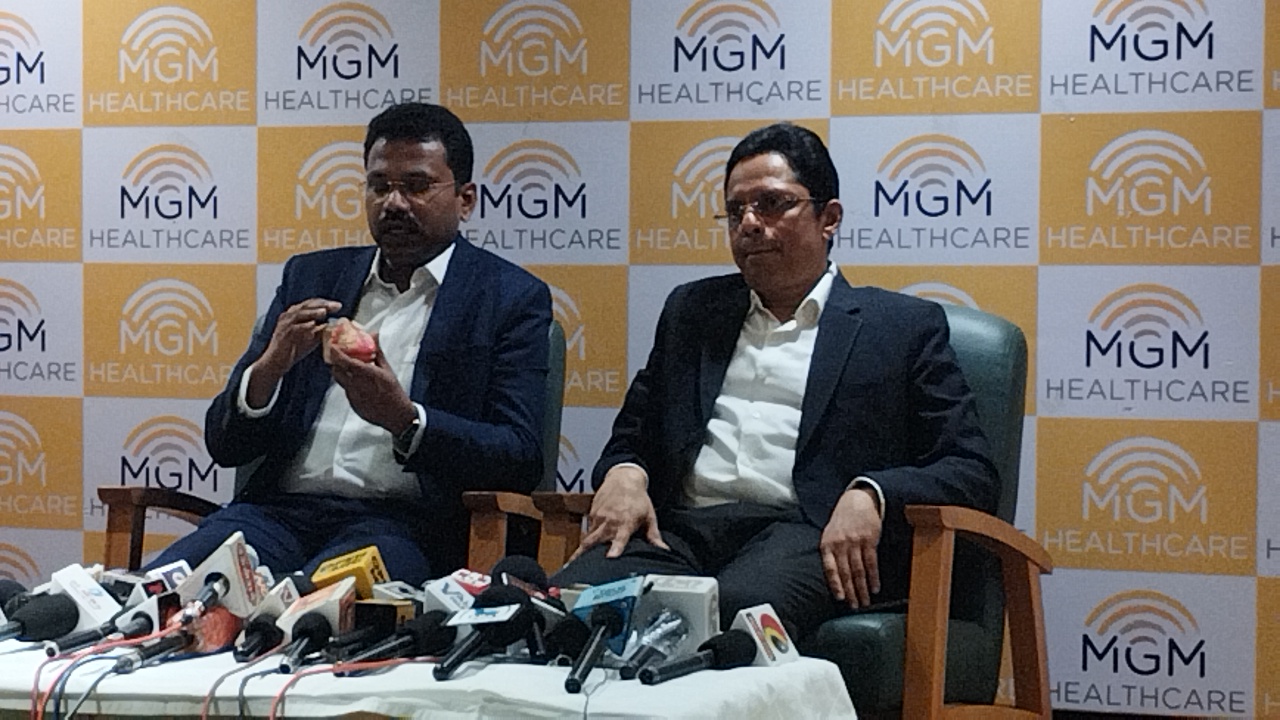


Dr. R.K.R Noveen Davidson, Senior Consultant, Paediatric Cardiac and Heart & Lung Transplant Surgeon performed an open-heart surgery on the girl.
During the surgery, upper heart chamber and its surrounding walls including Superior Vena Cava Area (SVCA), Infundibular Basal Septum (ICB) and a part of the Left Artium (LA), was cut to reach the mitral valve. It was then replaced with 25 MM mechanical valve. The left ventricle was resected before suturing all the incisions closed.
In his comments Dr. R.K.R Noveen Davidson said, “It is extremely rare for an individual with morquio syndrome to have Mesocardia. In this case, the girl has developed severe breathlessness because of the obstruction in her left ventricle. She has quit her studies and been confined to bed because of her condition. We had to replace the mitral valve only because it does not provide a long-term solution, and the inner lining of the heart gradually develops scar tissue.
After the Surgery, the patient is recovering well. it Will take another three to six months for complete recovery.
In his comments Dr. K. R. Balakrishnan, Chairman – Cardiac Sciences, Director – Institute of Heart and Lung Transplant & Mechanical Circulatory Support said, “I am proud of our multidisciplinary surgical and anaesthetic teams successfully completing a highly complex procedure on a child with Morquio syndrome. Our primary focus remains on the patient’s recovery and supporting their family through the next phase of care.”
Speaking about the post-operative management Dr. Suresh Rao K.G, Co-Director, Institute of Heart and Lung Transplant & Mechanical Circulatory Support said, “Anaesthetic and post-operative management in Morquio syndrome is highly complex due to a triad of critical challenges: severe upper airway distortion, cervical spine instability, and compromised cardiorespiratory function. This child also had restrictive lung defect and required close monitoring during the post-operative period.”